


HOT VS. COLD THERAPY FOR RECOVERY: WHAT WORKS, WHAT DOESN’T

The war between heat and ice has been raging in locker rooms and training rooms for decades. One minute you're told to ice everything. The next, everyone's swearing by saunas and hot plunges. Some say heat helps you relax, others say it makes inflammation worse. Some say cold reduces soreness, others say it blunts adaptation.
So which one is right?
The answer, as usual, is “it depends.” And the real answer is: both have a place if you use them right.
First, Understand What You’re Recovering From
Recovery isn't one thing. It’s a complex biological and neurological process that depends on what kind of stress you just subjected your body to.
After a heavy strength training session, you’re not just “tired.” You’ve caused mechanical muscle damage, taxed your nervous system, and disrupted homeostasis on multiple levels. Inflammation increases, blood flow shifts, muscle fibers tear and repair.
So recovery can mean a few different goals: reduce soreness, restore range of motion, calm the nervous system, improve circulation, or support long-term adaptation.
This is where both hot and cold therapy can come in, but not interchangeably, and not without intention.
Cold Therapy: Acute Relief, Not a Cure-All
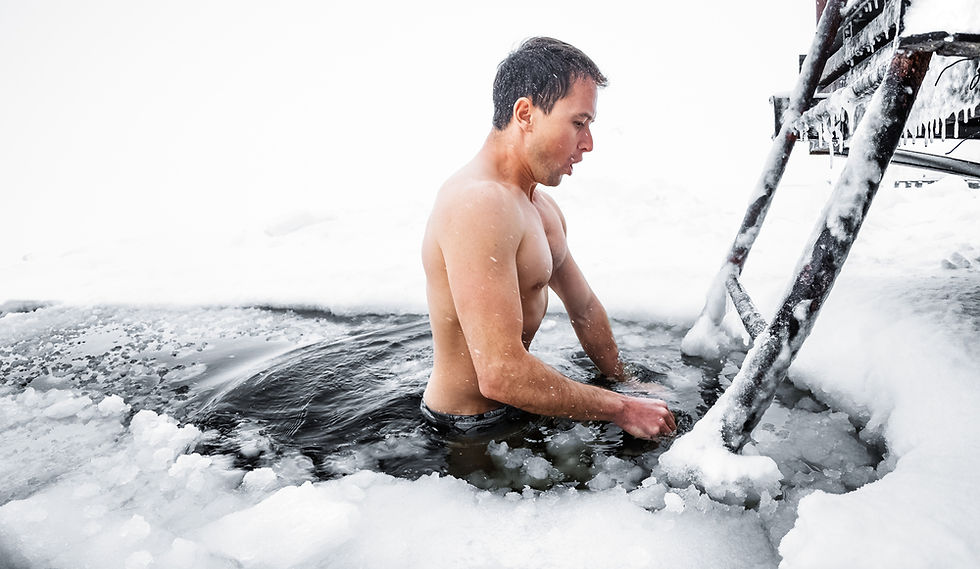
Let’s start with cold. Ice baths, cryo chambers, and even just a cold shower are all meant to do one main thing: blunt inflammation and reduce acute soreness.
After high-rep squats or brutal eccentric work, inflammation is a real problem. Your legs swell. Your knees ache. Your CNS feels fried. Applying cold reduces tissue temperature, constricts blood vessels, and can limit swelling and local inflammation.
That can help you walk down the stairs without looking like you just got off a horse. It can also reduce pain sensitivity in the short term.
But here’s the catch: using cold therapy too often, especially immediately after resistance training, may impair the very adaptations you're chasing. By limiting inflammation, you may also be limiting muscle growth and strength gains, at least slightly. That doesn’t mean cold is useless. It just means you shouldn't rely on it every time you feel sore, especially if hypertrophy is your primary goal.
Use a cold when you're dealing with acute pain, or joint inflammation, or when you're in a recovery deficit (like during competition prep or back-to-back training days). But don’t treat it like a recovery shortcut.
Heat Therapy: Long-Term Recovery and Movement Prep
Heat does the opposite: it dilates blood vessels, increases tissue elasticity, and promotes circulation. That makes it ideal for stiffness, tightness, and long-term recovery work.
Heat is especially useful for muscle groups that feel locked up or immobile after training, such as tight hips, achy shoulders, or sore spinal erectors. It’s also a great pre-workout tool if you’re training early in the morning or after a long day of sitting.
But heat’s benefits aren’t just muscular. It helps downregulate the nervous system too. Parasympathetic activity increases, heart rate slows, and stress hormones decrease. Saunas, in particular, can be a powerful tool for recovery, not just physically, but psychologically.
One thing to keep in mind: don’t apply heat to acute injuries or recently inflamed joints. You’ll likely make the situation worse by increasing fluid flow and prolonging swelling.
Contrast Therapy: Best of Both?
Alternating between hot and cold, called contrast therapy, has gained popularity for good reason. The idea is simple: hot opens up blood vessels, and cold constricts them. Switching between them creates a “pump” effect that promotes circulation, removes waste products, and brings in fresh oxygenated blood.
It’s especially helpful for athletes who feel sluggish, swollen or beat up after hard sessions. But again, timing matters. Use contrast therapy several hours post-training or on rest days, not directly after strength sessions where you want adaptations to settle in.
Conclusion
Recovery isn’t about doing what feels nice, it’s about doing what’s effective.
Use cold therapy sparingly and tactically when soreness threatens performance or inflammation gets in the way of movement. Use heat to prepare the body for action, or to help unwind chronic tension and boost circulation in the hours or days after training.
If you’ve trained hard enough to need recovery tools, you’ve earned the right to be intentional about using them.


Comments