


WHAT STRONGMAN TRAINING CAN TEACH YOU ABOUT REAL STRENGTH
- Sara Sutherland

- May 23
- 3 min read
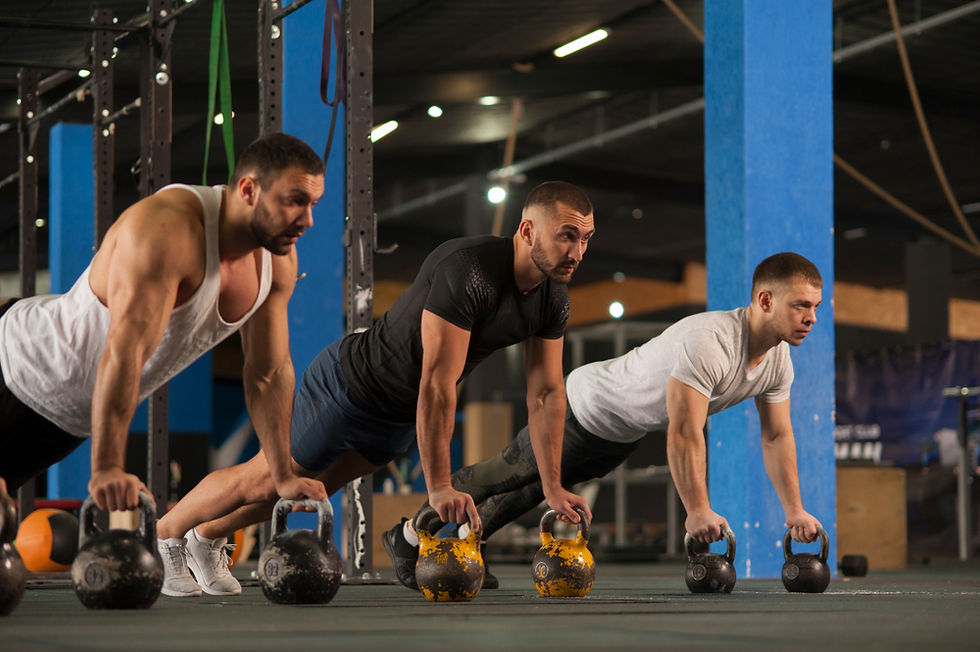
Strongman training might conjure images of giant men flipping tires or pulling trucks, but at its core, it’s about something deeper than spectacle. It’s about real-world strength—the kind that’s transferable, versatile, and useful beyond the gym. Whether you're an elite athlete or a casual lifter, incorporating strongman principles into your routine can elevate your physical capability in ways traditional barbell training often can’t.
Strength in Complexity
Traditional strength training often focuses on predictable, linear progress through exercises like squats, deadlifts, and bench presses. While effective, this can miss a crucial element of physical development: adaptability.
Strongman events are unpredictable by nature. One day you’re carrying a sandbag uphill, the next day you’re lifting an awkward log overhead. This variability forces the body—and mind—to adapt. It builds a more complete type of strength, one that includes balance, coordination, stability, and grit. You learn to produce force from unusual positions, stabilize uneven loads, and maintain composure under fatigue. That’s strength with depth.
Key Principles of Strongman Training
1. The Power of the Overhead Press
The strict overhead press, often neglected in modern gyms, is a cornerstone of strongman training. There’s no bounce from the legs, no help from momentum—just pure shoulder, triceps, and core strength. This kind of pressing develops not only raw upper-body power but also serious control through the trunk and spine.
Adding strict overhead work to your program forces you to earn your reps. It carries over to everything from improved posture to safer lifts under fatigue.
2. Awkward Objects Build Real-world Strength
Strongman athletes don’t train with perfectly knurled barbells and symmetrical dumbbells. They hoist stones, carry sandbags, and lift oddly shaped logs. These implements shift, roll, and resist you in ways traditional equipment never will.
Training with odd objects teaches your body to recruit stabilizers you didn’t know you had. It builds resilience through the joints and grip strength that sticks. It’s messy, it’s imperfect—and that’s exactly why it’s powerful.
3. Carry Heavy Things. Often.
Loaded carries—like the farmer’s walk, yoke walk, or sandbag carry—are brutally simple. Pick something heavy up, walk with it, and don’t drop it.
Few exercises build full-body strength and mental toughness like loaded carries. They tax the grip, crush the core, and challenge posture under load. More importantly, they translate to real life. Think of carrying groceries, helping a friend move, or navigating unstable terrain on a hike. Loaded carries build strength that shows up when you need it most.
4. Progressive Overload Still Matters
Strongman training isn’t a random circus act—it’s highly strategic. Progressive overload remains foundational. You lift heavier weights, go longer distances, or reduce rest periods over time. You track your progress and build incrementally, just like in powerlifting or bodybuilding.
But the difference is that progress in strongman also includes becoming more efficient with awkward movements and improving technique with non-standard equipment. It’s a broader form of progress that trains the brain and the body.
5. Strength That Works Outside the Gym
Strongman isn’t about sculpting the perfect physique or chasing a one-rep max in sterile conditions. It’s about cultivating strength that helps you in chaotic, uncontrolled environments. Whether you’re an athlete, first responder, parent, or weekend warrior, this kind of strength is invaluable.
The beauty of strongman-style training is its carryover. It doesn’t just make you stronger—it makes you more capable. And isn’t that the point of training in the first place?
How to Start
You don’t need Atlas stones or a yoke to begin training like a strongman. Use what you have. Substitute a sandbag for a barbell. Do overhead presses with kettlebells or dumbbells. Try heavy farmer’s walks with trap bars or dumbbells. You can even simulate a tire flip by dragging sleds or pushing prowlers.
Keep the movements compound. Keep the loads challenging. And above all, respect the process.
Final Thoughts
Strongman training isn’t just for the elite few—it’s a mindset. It challenges you to become more adaptable, more resilient, and more useful in your strength. It strips strength down to its essence: the ability to move, carry, lift, and endure.
If you’re ready to take your training beyond aesthetics or numbers on a bar, strongman might just be the path you didn’t know you were missing.


Comments